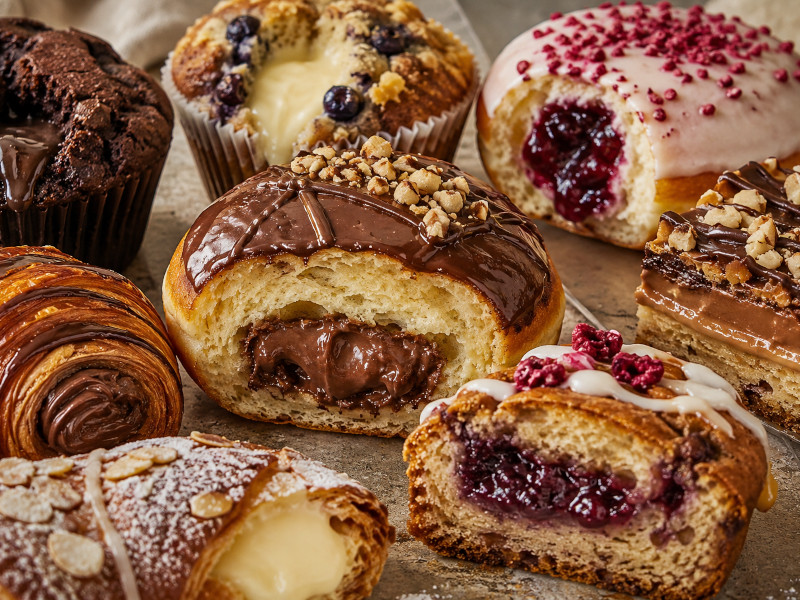

Senior Editor Joseph Clarke examines how fillings, toppings, and flavour systems are evolving into critical functional components within sweet bakery manufacturing
The modern sweet bakery sector has become considerably more technically demanding than it was even a decade ago. While indulgence remains central to consumer purchasing behaviour, producers are now expected to deliver significantly more than sweetness alone. Cakes, muffins, traybakes, pastries, doughnuts, and hybrid dessert formats must now balance premium appearance, stable texture, clean-label positioning, operational efficiency, and long shelf life, often within increasingly complex global distribution networks.
This shift has quietly elevated the role of fillings, toppings, and flavour systems from decorative additions to core functional ingredients. In many cases, they now determine whether a product can survive freezing, maintain consistency during transportation, or retain moisture balance throughout extended retail cycles. What once served primarily as visual differentiation is increasingly shaping manufacturing decisions across formulation, processing, and packaging.
The growing complexity of sweet bakery manufacturing is also being driven by changing product formats. Dessert-inspired bakery has expanded rapidly in both retail and foodservice, introducing multilayer products, injected fillings, premium inclusions, and increasingly elaborate decoration systems into high-volume production environments. The result is a category where ingredient performance can no longer be considered separately from processing capability.
As producers attempt to meet these demands, suppliers are responding with more technically advanced systems. Companies such as AAK, AB Mauri, Cargill, GNT, and Meurens have all expanded their focus beyond traditional ingredient supply toward application-specific systems designed to address moisture management, flavour retention, visual consistency, and shelf-life performance in industrial bakery environments.
Moisture Migration and Shelf-Life Stability
One of the most persistent technical challenges within sweet bakery production remains moisture migration. While consumers may only notice the final eating experience, producers understand that maintaining moisture balance across multiple product layers can determine the success or failure of an entire production run. Cakes absorbing moisture from fillings, toppings softening during storage, or inclusions destabilising texture profiles all create operational problems that can reduce shelf life and increase waste.
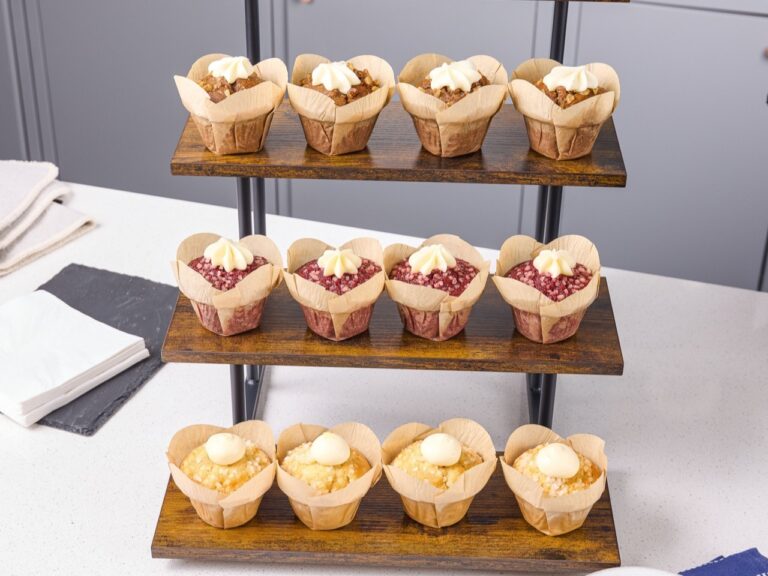
The issue becomes particularly acute in products combining multiple textures. A filled muffin, for example, may contain a cake base, fruit preparation, cream filling, glaze, and decorative inclusion, each carrying different water activity levels. Without careful formulation, moisture naturally migrates between components over time, altering texture and compromising product quality.
Consequently, many ingredient systems are now designed with moisture control as a primary function. Syrup systems, fat-based barriers, humectants, and stabilised fillings increasingly play a role not only in flavour delivery but also in preserving structural consistency throughout distribution. Meurens, for instance, has developed cereal extracts and syrup systems aimed at improving moisture retention while supporting cleaner ingredient declarations. Meanwhile, fat-based systems supplied by companies such as AAK are often used to create more stable cream and filling applications capable of maintaining consistency under chilled or ambient conditions.
This technical evolution reflects a wider industry reality. Bakery producers are no longer manufacturing solely for local distribution. Products frequently move through longer and more unpredictable supply chains, particularly within private label and export-driven production. A traybake produced in one country may now require several weeks of ambient stability before reaching consumers elsewhere, significantly increasing the importance of filling and topping performance.
Clean Label Reformulation Without Sacrificing Performance
Clean-label expectations continue to place additional pressure on formulation teams. Removing artificial preservatives, colours, and flavourings can significantly complicate stability management, particularly in sweet bakery where visual appeal remains critical. Natural systems often behave differently under thermal stress, while reduced-sugar formulations may alter moisture retention, aeration, and microbial stability simultaneously.
This is where colour and flavour specialists such as GNT have become increasingly relevant within bakery development. Natural colour systems are now expected to maintain visual vibrancy throughout baking and storage, despite exposure to heat, oxygen, and light. Historically, this level of stability was difficult to achieve consistently using naturally derived ingredients. However, advances in concentration, encapsulation, and application-specific formulations are gradually improving performance.
Nevertheless, the technical trade-offs remain substantial. Reduced sugar content can weaken flavour impact and alter texture perception, while alternative sweetening systems may introduce processing complications. The challenge for producers is therefore no longer simply replacing one ingredient with another, but rather rebuilding the functionality that conventional systems previously delivered across the entire manufacturing process.
The Rise of Hybrid and Dessert Inspired Bakery
Alongside reformulation pressures, premiumisation continues to reshape sweet bakery development globally. Consumers increasingly expect bakery products to deliver experiences traditionally associated with desserts or confectionery. Filled croissants, layered brownies, injected doughnuts, cheesecake-inspired muffins, and hybrid pastry products are now appearing across both retail and foodservice sectors. These formats require significantly greater processing precision than conventional bakery lines historically demanded.
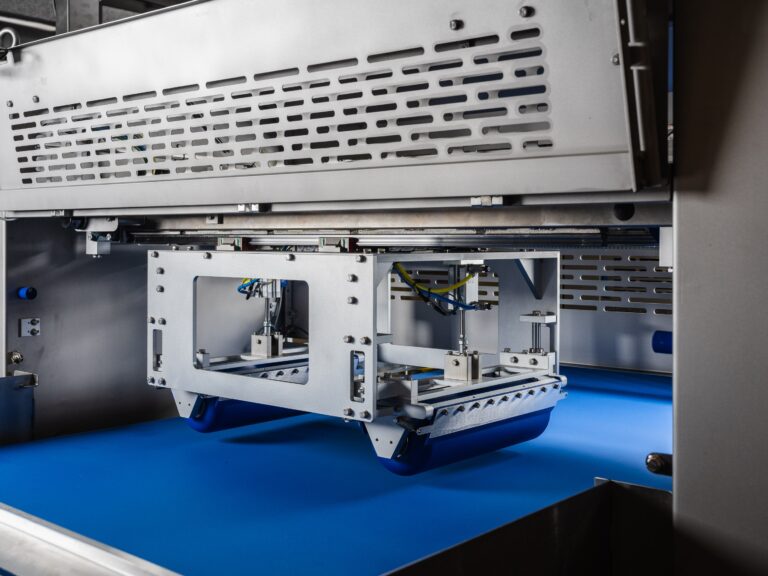
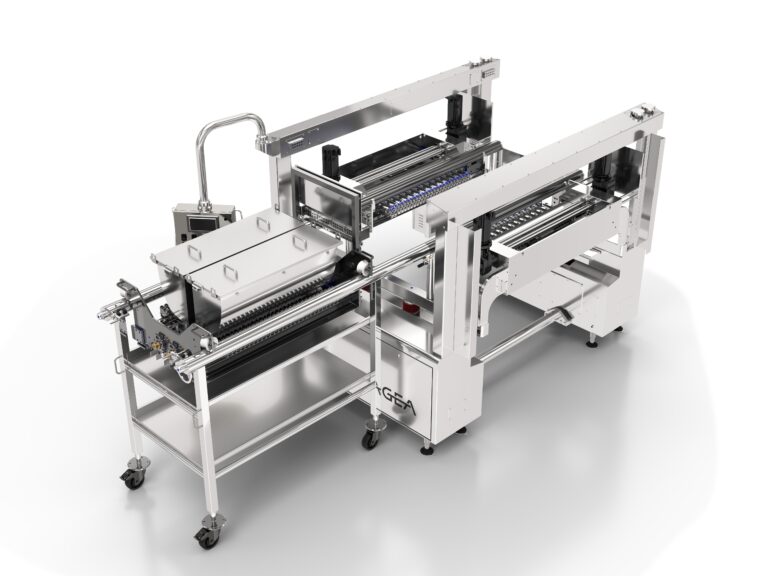
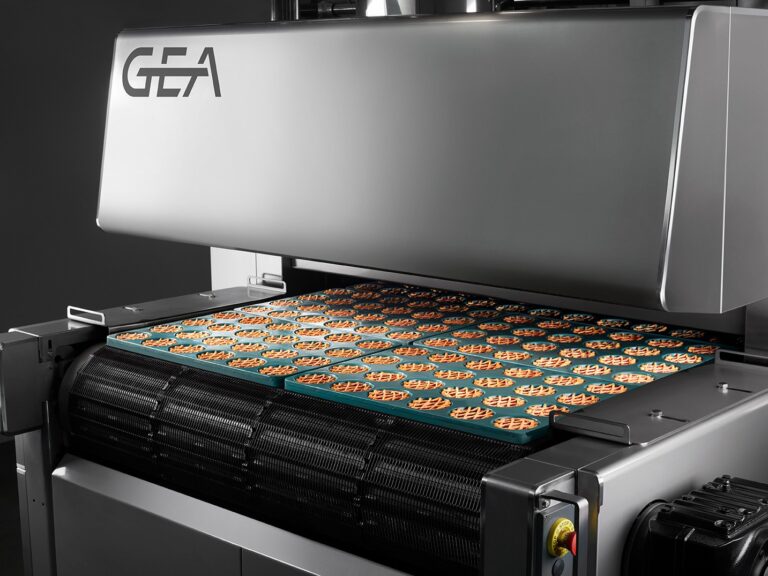
As products become more complex structurally, production systems must adapt accordingly. Depositing accuracy, filling viscosity, topping adhesion, and slicing integrity all become more critical once multiple layers and inclusions are introduced. Ultrasonic cutting systems, advanced depositors, and automated decoration technologies are therefore becoming increasingly important within high-volume sweet bakery manufacturing.
The rise of dessert-inspired bakery has also strengthened the relationship between bakery and confectionery ingredient technologies. Cargill, for example, continues to expand indulgence-focused systems that support crossover applications between confectionery and bakery. Chocolate-based fillings, caramel systems, and layered flavour inclusions are increasingly used to create products that blur category boundaries entirely.