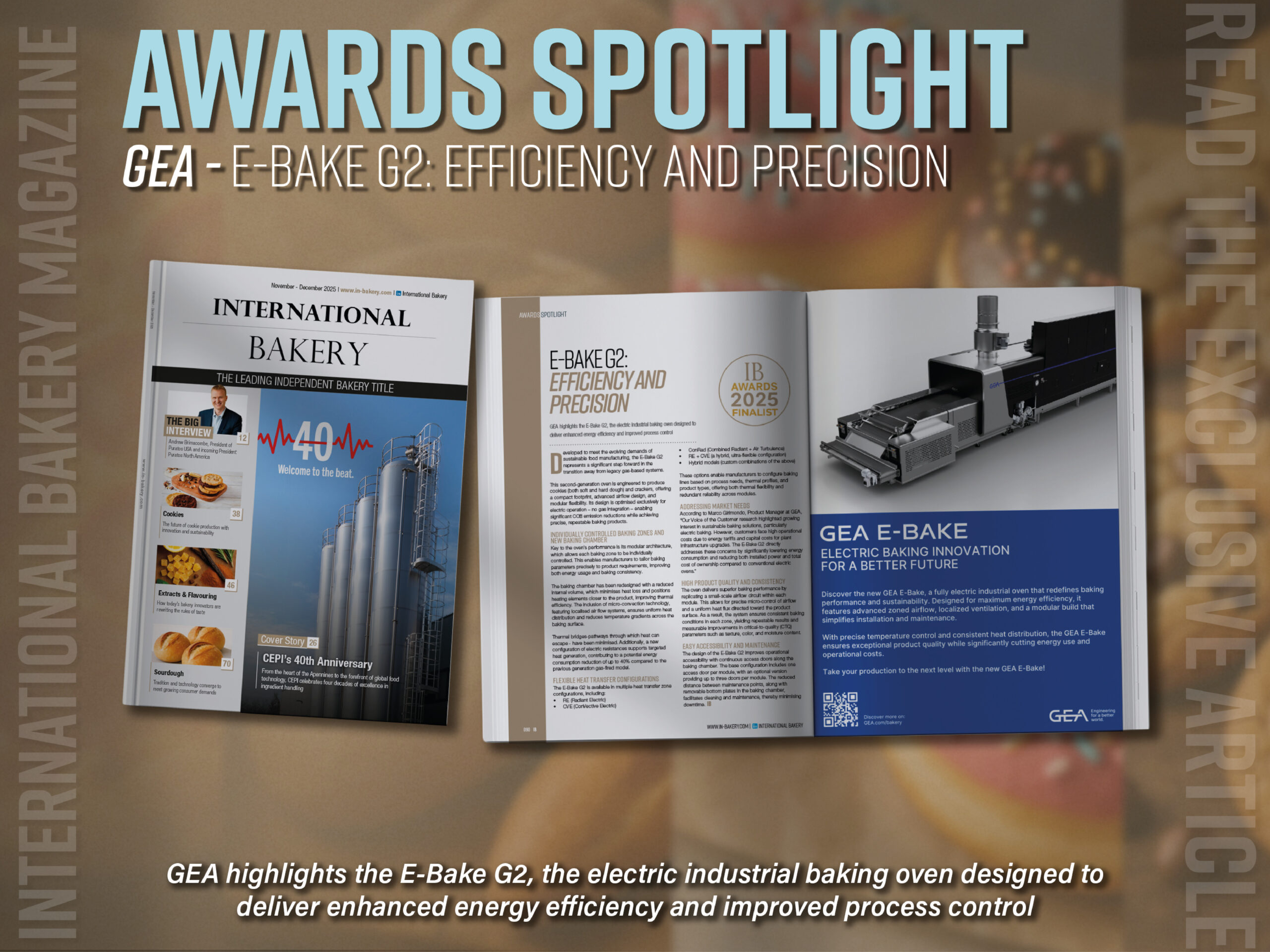

GEA highlights the E-Bake G2, the electric industrial baking oven designed to deliver enhanced energy efficiency and improved process control
Developed to meet the evolving demands of sustainable food manufacturing, the E-Bake G2 represents a significant step forward in the transition away from legacy gas-based systems.
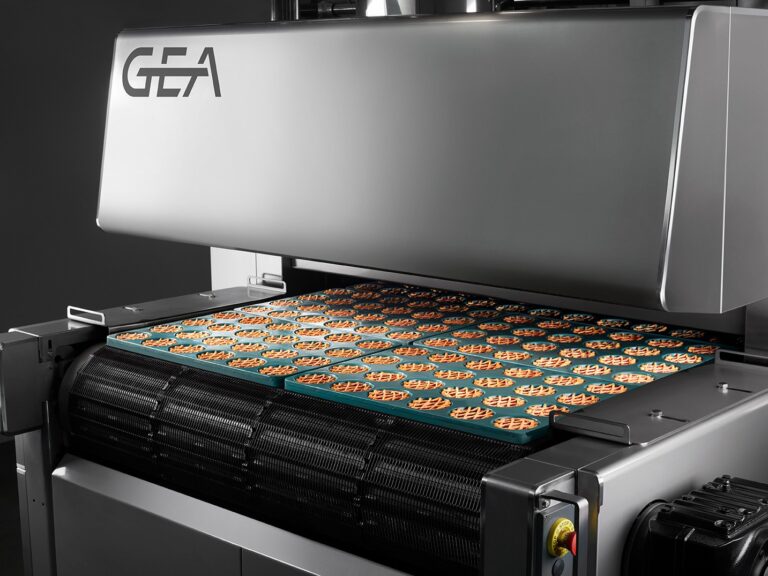
This second-generation oven is engineered to produce cookies (both soft and hard dough) and crackers, offering a compact footprint, advanced airflow design, and modular flexibility. Its design is optimised exclusively for electric operation – no gas integration – enabling significant CO₂ emission reductions while achieving precise, repeatable baking products.
Individually controlled baking zones and new baking chamber
Key to the oven’s performance is its modular architecture, which allows each baking zone to be individually controlled. This enables manufacturers to tailor baking parameters precisely to product requirements, improving both energy usage and baking consistency.
The baking chamber has been redesigned with a reduced internal volume, which minimises heat loss and positions heating elements closer to the product, improving thermal efficiency. The inclusion of micro-convection technology, featuring localised air flow systems, ensures uniform heat distribution and reduces temperature gradients across the baking surface.
Thermal bridges-pathways through which heat can escape – have been minimised. Additionally, a new configuration of electric resistances supports targeted heat generation, contributing to a potential energy consumption reduction of up to 40% compared to the previous generation gas-fired model.
Flexible heat transfer configurations
The E-Bake G2 is available in multiple heat transfer zone configurations, including:
- RE (Radiant Electric)
- CVE (ConVective Electric)
- ConRad (Combined Radiant + Air Turbulence)
- RE + CVE (a hybrid, ultra-flexible configuration)
- Hybrid models (custom combinations of the above)
These options enable manufacturers to configure baking lines based on process needs, thermal profiles, and product types, offering both thermal flexibility and redundant reliability across modules.
Addressing market needs
According to Marco Girimondo, Product Manager at GEA, “Our Voice of the Customer research highlighted growing interest in sustainable baking solutions, particularly electric baking. However, customers face high operational costs due to energy tariffs and capital costs for plant infrastructure upgrades. The E-Bake G2 directly addresses these concerns by significantly lowering energy consumption and reducing both installed power and total cost of ownership compared to conventional electric ovens.”
High product quality and consistency
The oven delivers superior baking performance by replicating a small-scale airflow circuit within each module. This allows for precise micro-control of airflow and a uniform heat flux directed toward the product surface. As a result, the system ensures consistent baking conditions in each zone, yielding repeatable results and measurable improvements in critical-to-quality (CTQ) parameters such as texture, color, and moisture content.
Easy accessibility and maintenance
The design of the E-Bake G2 improves operational accessibility with continuous access doors along the baking chamber. The base configuration includes one access door per module, with an optional version providing up to three doors per module. The reduced distance between maintenance points, along with removable bottom plates in the baking chamber, facilitates cleaning and maintenance, thereby minimising downtime.
Visit www.gea.com now to find out more