

Jeremy Burks, CEO of Nutriearth, explains how functional ingredients like naturally vitamin D3-rich flours and oils can help address deficiency through everyday bakery products
Jeremy, could you begin by telling us a little about Nutriearth’s journey so far and what inspired the company’s focus on functional, nutrient-rich ingredients for everyday foods?
50% of the world’s population is deficient in vitamin D. Most staple foods consumed daily are low in this micronutrient. At the same time, current supply chains rely on heavy, chemical-based processes.
From the outset, our mission and purpose has been to act for health through new and sustainable nutrition. We focused on developing a natural, sustainable and scalable solution that could be easily integrated into everyday foods.
Thanks to more than 60 global patents, we have developed a unique biomimetic method that allows us to produce effective vitamin D3 in France, without extraction and free from chemicals, solvents and additives. Our method is inspired by nature itself and mimics biological mechanisms rather than relying on intensive processing.
Nutriearth now offers multiple functional formats based on this innovation, including a vitamin D3-rich flour, and a vitamin D3-rich oil. Both formats are designed to integrate seamlessly into everyday food products, allowing manufacturers to enrich familiar recipes while maintaining taste and texture.
Nutriearth recently inaugurated its production facility in France. What does this milestone represent for the company’s growth and for Europe’s broader functional ingredients landscape?
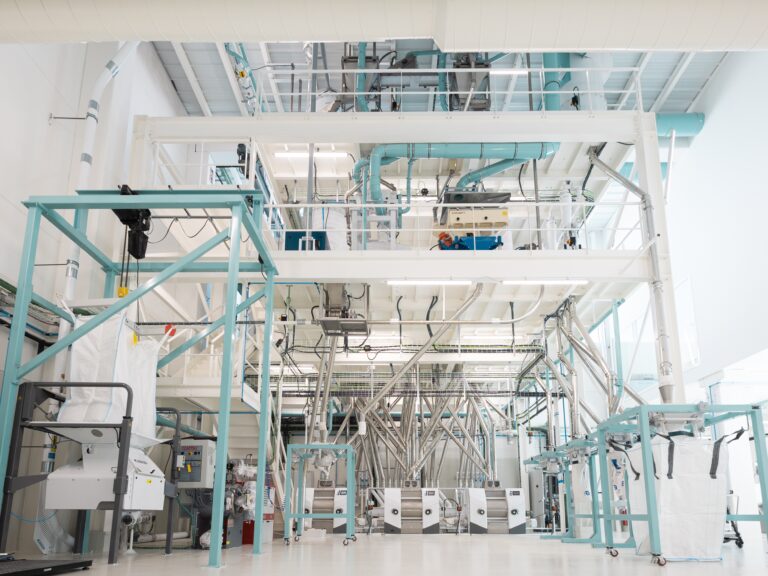
The inauguration of our production facility marks a major step forward for Nutriearth. It represents the transition from innovation and pilot phases to full-scale production. For us as a company, it clearly demonstrates that our solution is now mature, robust and ready to serve, not only across Europe but also on international markets.
With our current production capabilities, we can provide enough vitamin D3 to cover the recommended daily intake for over 50 million people, illustrating both the scalability and the real-world impact of our approach.
In addition, for some customers and consumers, local supply is growing in importance and that’s often not possible, particularly for vitamin D3, where today nearly all global production is concentrated in Asia.
By producing in France, we are taking a concrete step toward more resilient, local and sustainable ingredient supply chains, supporting manufacturers seeking reliable, high-quality and locally produced functional solutions.
From a scientific perspective, what makes your functional flour ingredients distinct compared to traditional flours or fortification methods?
Rather than adding synthetic or external vitamin D, our ingredients are naturally rich in vitamin D3 thanks to our biomimetic production method. The vitamin D3 remains in its original matrix, whether in flour or oil form, providing excellent bioavailability.
Compatibility with manufacturers’ operations is essential. Our tests have shown that Nutriearth’s vitamin D3 remains stable even at high temperatures, a critical requirement for bakery applications. This stability ensures that the nutritional value is preserved throughout processing, without compromising product quality.
From a formulation perspective, our flour can be incorporated in very small quantities directly into recipes, allowing manufacturers to enrich everyday products without reformulating from scratch. This simplicity of use is key for large-scale adoption in the food industry.
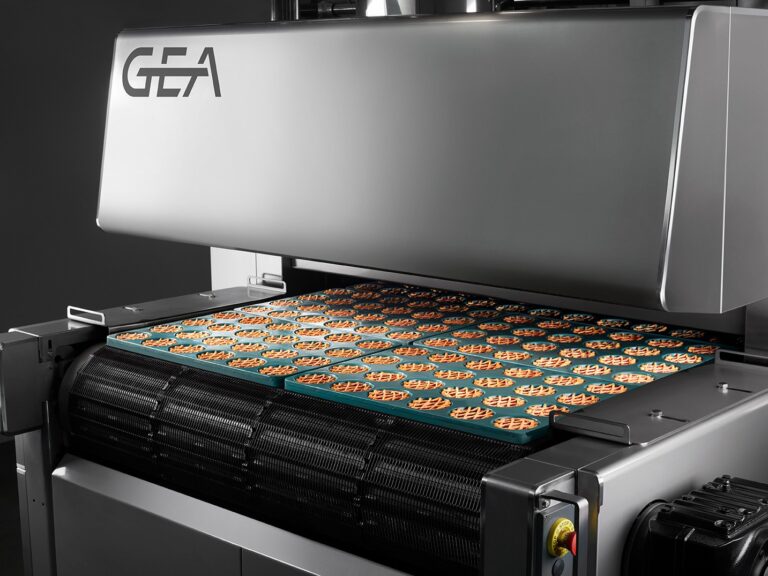
As a practical example, we worked with a biscuit manufacturer to develop madeleines made “rich in vitamin D” with N-utra. Each serving delivers 25% of the recommended daily intake of vitamin D3, while maintaining taste, texture, and familiar consumer habits, demonstrating that functional nutrition can be seamlessly integrated into indulgent, everyday products.
There’s growing interest in naturally derived sources of essential nutrients like vitamin D and protein. How does N-utra flour align with current consumer expectations for clean label and nutrient transparency?
Consumers today want clarity: they want to know where ingredients come from, how they are produced, and what benefits they provide. Our flour and oil are produced without chemical solvents or complex extraction processes, and it is naturally rich in essential nutrients, a truly natural vitamin D3.
This approach allows brands to move away from long ingredient lists and artificial fortification strategies, adopting a more transparent and functional nutrition positioning. The vitamin D3 present in our ingredients supports well-recognied health benefits, including bone health, muscle function, and immune system support, and when incorporated into everyday foods, a single serving can deliver a meaningful portion of the recommended daily intake, making it easier for consumers to meet their nutritional needs reliably and naturally.
When it comes to bakery applications – from breads and cookies to energy bars – what challenges and opportunities arise when formulating with ingredients like N-utra?
The main opportunity for manufacturers lies in the ability to significantly enhance the nutritional value of everyday products using extremely low inclusion rates, without changing existing recipes or production processes. This minimises technical constraints while maximising nutritional impact.
The flour can be used across a wide range of applications, including bread, brioches, cookies, cakes, pasta and energy bars. By integrating vitamin D3 seamlessly into products that are already part of everyday habits, it becomes possible to deliver nutritional benefits at scale without requiring consumers to change their routines.
Because bakery products are part of everyday diets across Europe, they represent an effective vector for large-scale nutritional provision.
How do you see ingredient innovation shaping the future of the bakery sector, particularly as consumers demand both indulgence and nutritional value?
I strongly believe the future of bakery lies in what I call functional indulgence. Consumers no longer want to choose between pleasure and health, they expect both in the same product.
In this context, bakery brands and food manufacturers have a key role to play in the nutritional transition. By improving the nutritional quality of products that are already widely consumed, they can positively influence daily intake in a pragmatic and accessible way, beyond the traditional use of supplements.
Ingredient innovation makes this possible by preserving the sensory experience people love while adding meaningful health benefits. Ingredient innovation will combine indulgence, nutritional impact and long-term sustainability, reflecting a broader shift toward functional foods seamlessly integrated into everyday diets.