

Ahead of interpack 2026 in Düsseldorf, CEPI shares its vision for a connected, circular food industry driven by integrated systems, digitalisation, and sustainable design
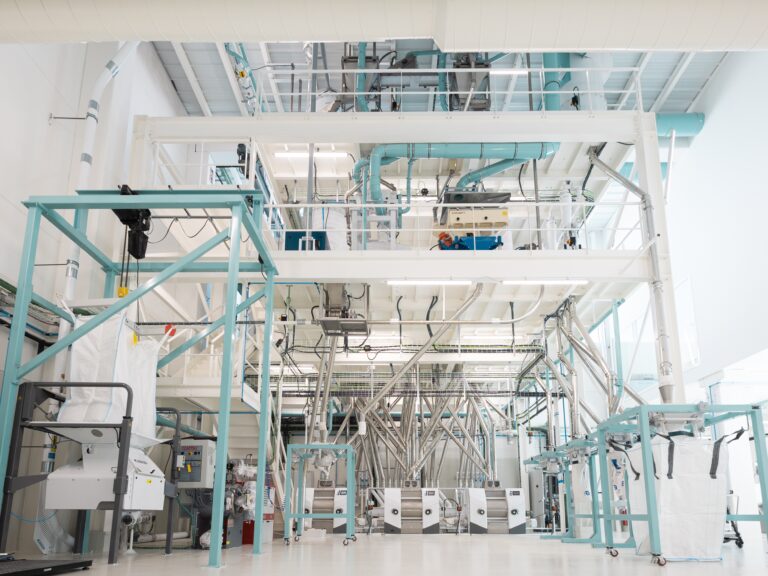
A turnkey solution is one that makes the user independent. But what does this mean in practice? First of all, the process must be covered from start to finish – in our case, from storage to the dosing of ingredients. Secondly, the manufacturer’s technological offering must be sufficiently diverse to support all the materials and processes the user wishes to include, without the need to involve another supplier. This means the manufacturer must possess all the expertise required to design, build, and commission the system. Last but not least, the system must provide data relating to its operations. We believe that any system unable to do so cannot be considered truly turnkey.
CEPI was founded on this philosophy and continues to evolve around it. Each installation is fully customised to meet the user’s needs and to optimise production in a modular way, without ever disrupting existing processes. This means food manufacturers do not need to adapt to a prefabricated solution; instead, the system adapts to their ingredients and their production flow. Working with a single partner also simplifies communication, as the same team designs, builds, and commissions the plant, knowing it in every detail.
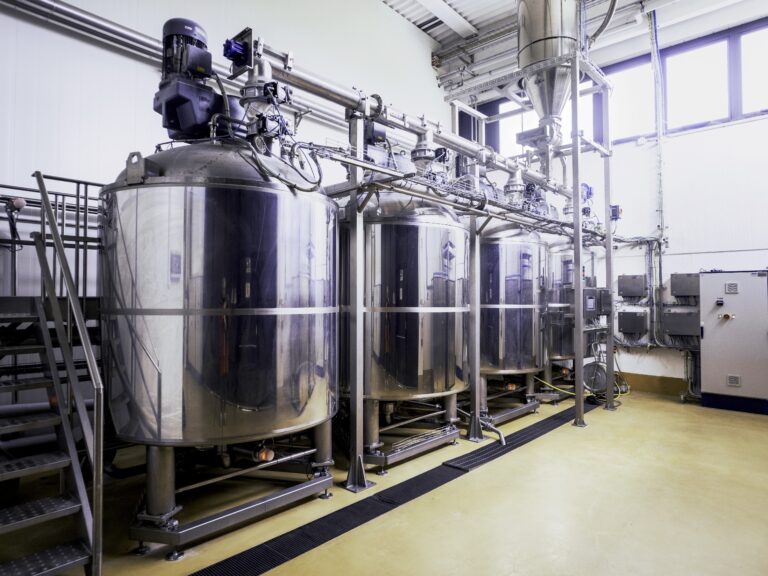
Every ingredient comes with its own specific requirements. Fats, creams, and dairy derivatives require careful temperature control. Sugar and salt demand dehumidified air. Viscous ingredients need dedicated modes of transport and dosing. CEPI coordinates these aspects organically so that every solution operates as part of a single, efficient, fully traceable process.
The true key to CEPI’s method is design that considers the entire production context. All materials are checked and tracked from the moment they enter the warehouse, enabling precise management of temperature, atmosphere, and tolerances. Adjustments can be continuous because they are based on real data. Each installation is unique and originates from ongoing dialogue with the customer, always opening up new possibilities for improvement. The Tracking System software provides process control, warehouse management, and complete traceability by digitalising all material movements. Customers receive a real-time overview of the production process: they obtain the history of storage and dosing operations, consumption statistics, batch reports and deviations, stock visualisation, and dynamic charts illustrating trends. Ingredients are monitored from the moment they enter the warehouse, carrying their virtual label through the entire production process and adding new information each time an operation is performed.
Because the software is developed in-house, all information can be integrated with ERP and MES systems, and therefore used in whatever way the customer requires. With the Tracking System, it is possible to quickly perform mass-production balances, monitor consumption, generate information for Quality Control and Purchasing, create projections for future production, and optimise ongoing processes. Data on tolerances and dosing sequence can be used to check the state of the plant and determine whether maintenance is needed.
CEPI is currently also working on generating additional process data for customers, including alarm histories that support tailored maintenance planning and solutions for recording energy consumption over time.
CEPI’s vision goes beyond production efficiency to embrace a broader, long-term perspective in which durability and sustainability become integral to the design. Each plant is conceived as an organic system in which storage, transport, dosing, and automation work together harmoniously. This coherence is what makes CEPI’s plants flexible and able to adapt over time, accommodating future developments without disrupting the customer’s production process.
One of CEPI’s distinguishing features is its ability to give new life to existing plants. Through revamping interventions, many systems continue to operate efficiently even thirty years after installation – a result made possible by high-quality materials and a design approach focused on longevity. In this way, the company reduces waste and unnecessary replacement, contributing in a tangible way to the principles of the circular economy.
Circularity is, in fact, central to CEPI’s philosophy. To gain a deeper understanding, the company commissioned a study based on the Ellen MacArthur Foundation’s methodology, one of the leading authorities in this field. The model assesses not only the origin of materials but also the product’s lifespan, its use, and what happens at the end of its life cycle. Achieving an index of 0.7 confirms the high share of reusable and recyclable materials in CEPI plants and reinforces the importance of an approach centred on reuse and waste reduction.
This way of designing has a clear objective: to provide solutions that make users independent, long-lasting, and perfectly aligned with the values of responsible production. Sustainability is therefore not an added feature but a natural outcome of a method that considers each plant in its entirety and enhances its complete life cycle.