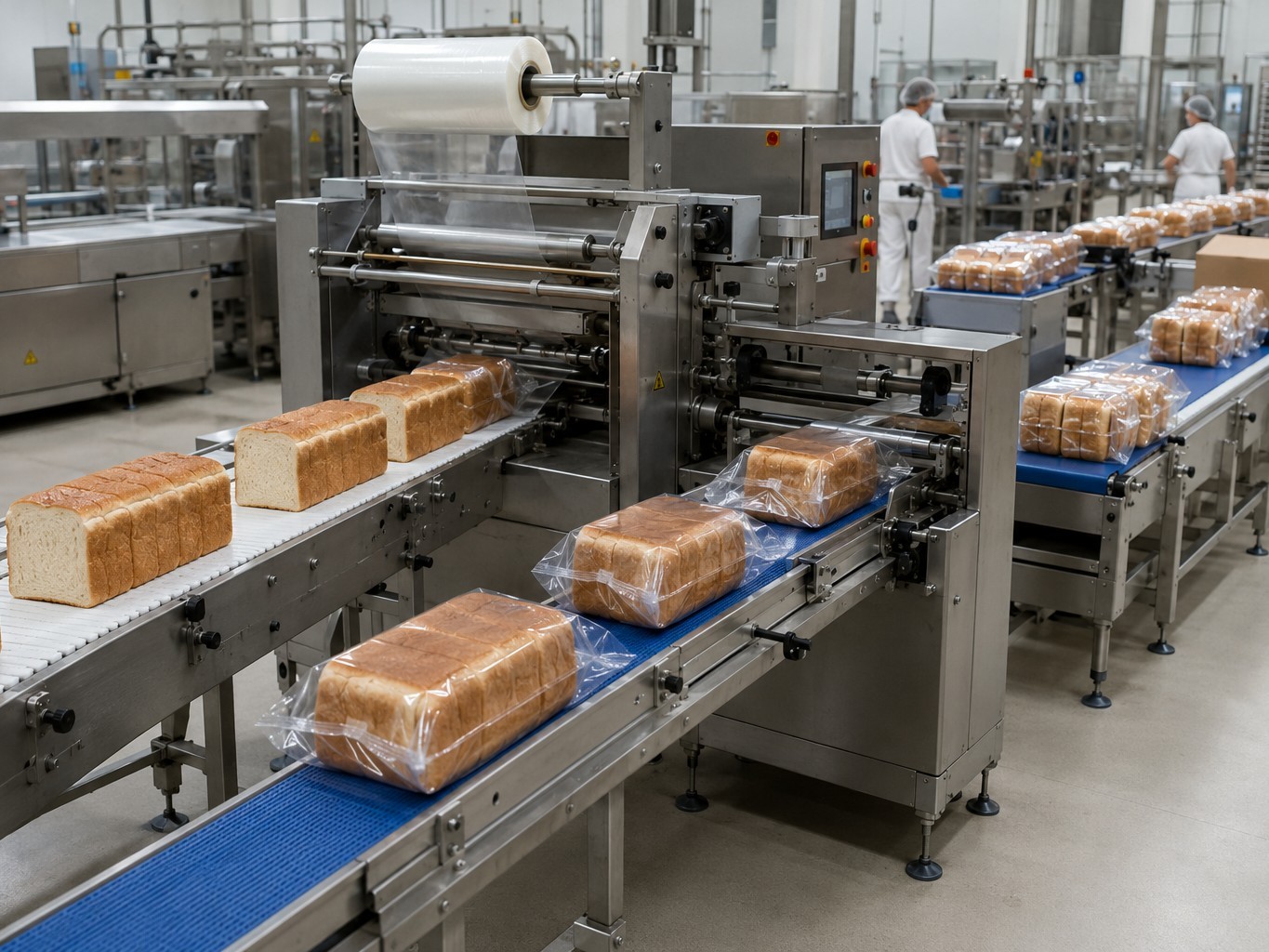

Features Editor Katie Tracy explores how flow wrapping and multipack automation are helping industrial bakers protect sandwich breads and loaves while improving packaging flexibility and line efficiency
Flow wrapping and multipack automation are becoming increasingly important as industrial bakers balance freshness, throughput, material reduction and retail flexibility. For sandwich breads and loaves, however, speed is only part of the equation. Packaging systems must protect a soft, easily compressed product while delivering dependable seals, efficient changeovers and versatile formats suited to both household consumption and modern foodservice distribution.
Why is flow wrapping becoming more important for sandwich bread and loaves?
The familiar clipped or tied bread bag remains deeply established, particularly for sliced pan bread. It is easy to open, can be reclosed and gives the loaf space to retain its shape. Yet bakers now produce smaller loaves, seeded and premium recipes, gluten-free products and foodservice formats alongside conventional bread. This wider mix is creating room for horizontal flow wrapping where barrier performance, pack consistency or automation can justify a different approach.
In a horizontal flow wrapper, film is formed around the loaf and sealed longitudinally and at each end. The resulting pack can offer a tidy presentation, controlled dimensions and compatibility with coding, inspection and downstream handling. Seal parameters can be managed more precisely than in a loosely closed bag, while the format can support modified-atmosphere packaging where the product and distribution model require it. ULMA, for example, lists horizontal flow-pack applications for sliced bread, tin loaves and baguettes, illustrating how the technology has moved beyond small cakes and biscuits.
That does not mean flow wrapping is automatically the best option for every sliced loaf. Bread can continue releasing moisture and gases after baking, and an unsuitable barrier or premature packing may encourage condensation. Crusty and soft breads also have very different moisture requirements. A film specification, pack atmosphere and cooling regime must therefore be developed as one system rather than selected independently.
The commercial case depends on the product journey. A sealed pack may help protect quality over longer distribution distances and run predictably through robotic case packing. Conversely, a mainstream loaf opened repeatedly may still favour a conventional bread bag. Flow wrapping is therefore another route to match with product, shelf-life and channel requirements, rather than a universal replacement for bagging.
How do multipack systems create new options for bread manufacturers?
Multipacking can mean multiple loaves enclosed in outer film, individually wrapped portions collated into a retail pack, or primary packs grouped in a tray, case or shelf-ready unit. Retailers may want a promotional twin pack, while catering and wholesale customers may prioritise protected portions, rapid handling and accurate counts.
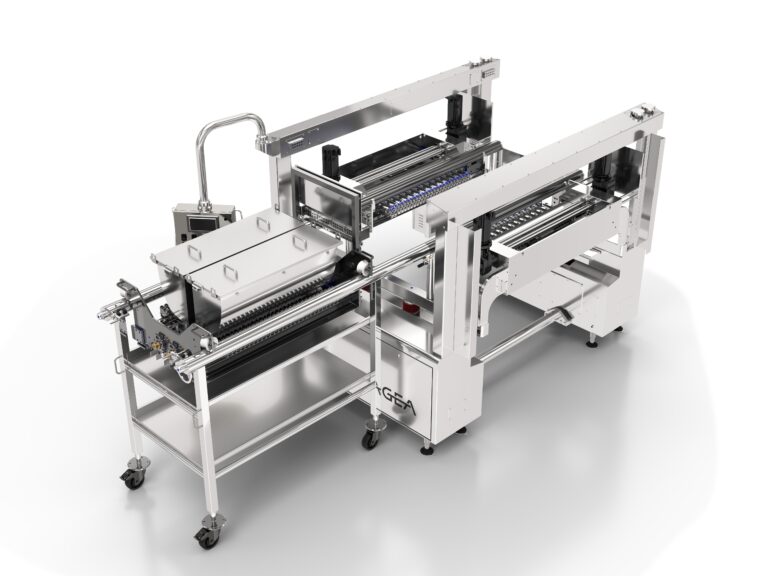
For industrial bakers, the attraction lies in creating these formats without building a dedicated line for each one. A flexible system can receive loaves or primary packs, establish the required pitch, form groups and transfer them into an outer wrap or secondary container. Schubert’s broader bakery portfolio combines robotic product handling with flow wrapping, while its flow-packing technology can arrange baked products individually or in grouped formats. BluePrint Automation, also known as BPA, operates mainly further downstream, handling flexible packs and loading them into cases, trays or shelf-ready configurations. These are distinct stages, but their coordination determines whether a multipack line runs smoothly.
The central challenge is variability. Bread dimensions can change with recipe, proofing conditions and bake profile. A nominally identical loaf may be slightly wider, taller or softer from one batch to the next. Multipack equipment must accommodate that natural variation without forcing products into a rigid pattern that causes deformation. Control of spacing is critical: too little separation can disrupt sealing, while excessive gaps waste film and create an unstable pack.
Changeover design is as important as headline speed. Bakeries may switch among loaf sizes, pack counts, printed films and case patterns within one shift. Recipe-driven settings, repeatable guides and tool-less adjustments reduce the risk of film-tracking or sealing problems. Multipacking adds more dependencies, so the wrapper, grouping equipment, conveyors and case packer should be treated as a connected cell.
Read the full article in our latest issue here