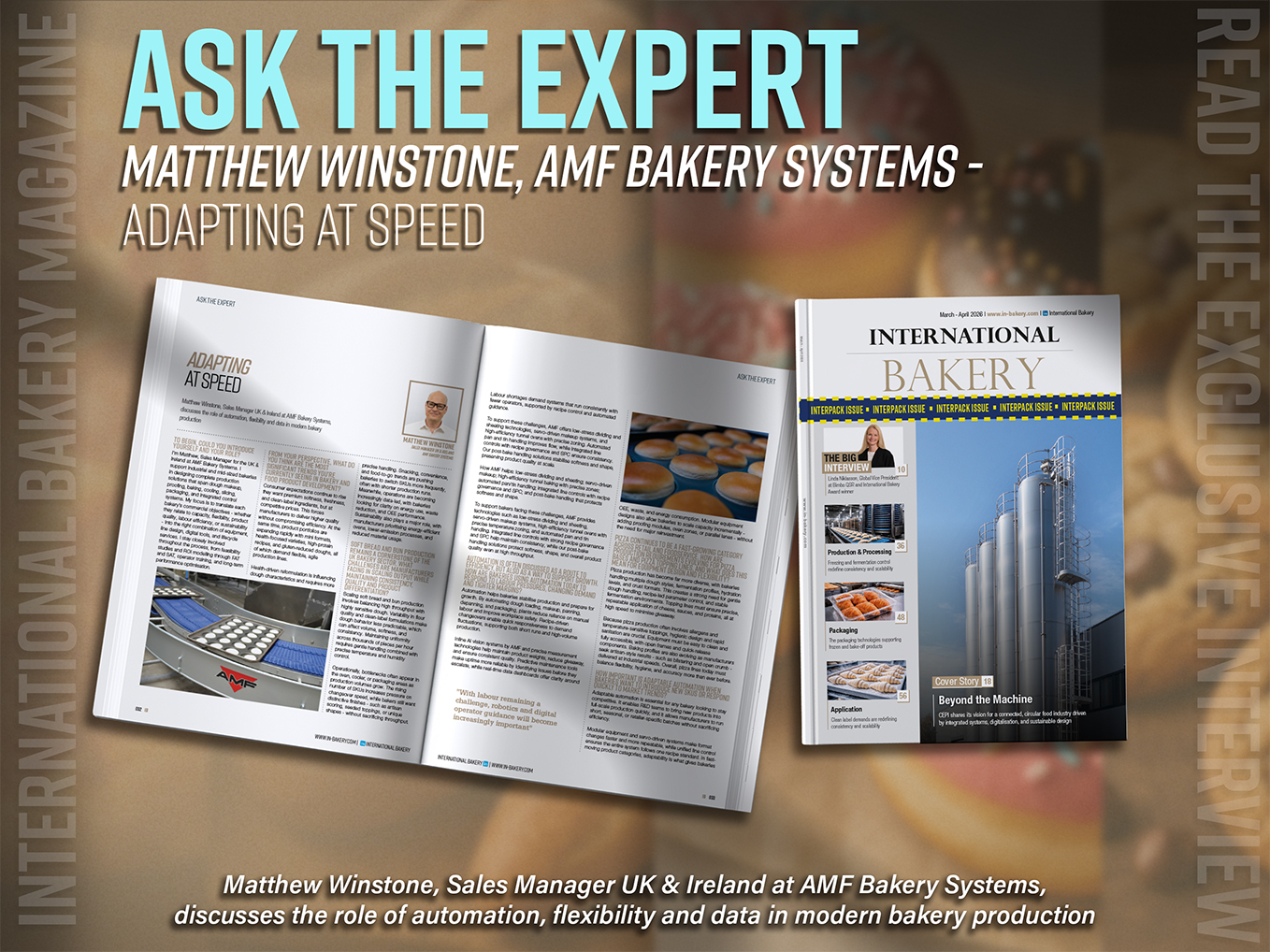

Matthew Winstone, Sales Manager UK & Ireland at AMF Bakery Systems, discusses the role of automation, flexibility and data in modern bakery production
To begin, could you introduce yourself and your role?
I’m Matthew, Sales Manager for the UK & Ireland at AMF Bakery Systems. I support industrial and mid‑sized bakeries in designing complete production solutions that span dough makeup, proofing, baking, cooling, slicing, packaging, and integrated control systems. My focus is to translate each bakery’s commercial objectives – whether they relate to capacity, flexibility, product quality, labour efficiency, or sustainability – into the right combination of equipment, line design, digital tools, and lifecycle services. I stay closely involved throughout the process, from feasibility studies and ROI modelling through FAT and SAT, operator training, and long‑term performance optimisation.
From your perspective, what do you think are the most significant trends you’re currently seeing in bakery and food product development?
Consumer expectations continue to rise they want premium softness, freshness, and clean-label ingredients, but at competitive prices. This forces manufacturers to deliver higher quality without compromising efficiency. At the same time, product portfolios are expanding rapidly with mini formats, health‑focused varieties, high‑protein recipes, and gluten‑reduced doughs, all of which demand flexible, agile production lines.
Health‑driven reformulation is influencing dough characteristics and requires more precise handling. Snacking, convenience, and food‑to‑go trends are pushing bakeries to switch SKUs more frequently, often with shorter production runs. Meanwhile, operations are becoming increasingly data-led, with bakeries looking for clarity on energy use, waste reduction, and OEE performance. Sustainability also plays a major role, with manufacturers prioritising energy‑efficient ovens, lower-emission processes, and reduced material usage.
Soft bread and bun production remains a cornerstone of the UK bakery sector. What challenges are manufacturers facing in scaling output while maintaining consistency, quality and product differentiation?
Scaling soft bread and bun production involves balancing high throughput with highly sensitive dough. Variability in flour quality and clean-label formulations make dough behavior less predictable, which can affect volume, softness, and consistency. Maintaining uniformity across thousands of pieces per hour requires gentle handling combined with precise temperature and humidity control.
Operationally, bottlenecks often appear in the oven, cooler, or packaging areas as production volumes grow. The rising number of SKUs increases pressure on changeover speed, while bakers still want distinctive finishes – such as artisan scoring, seeded toppings, or unique shapes – without sacrificing throughput. Labour shortages demand systems that run consistently with fewer operators, supported by recipe control and automated guidance.
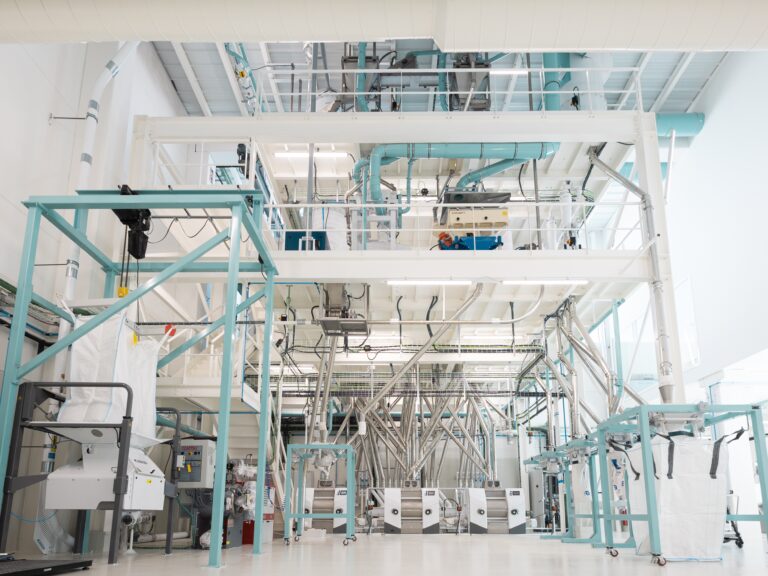
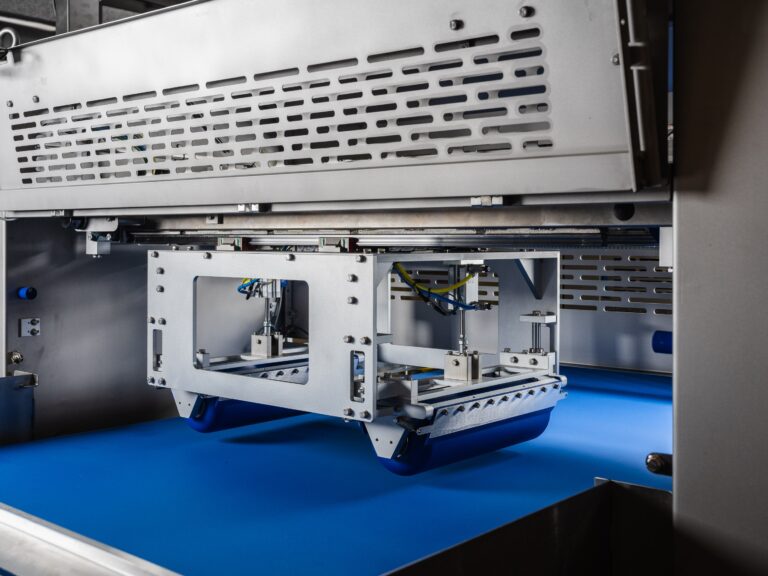
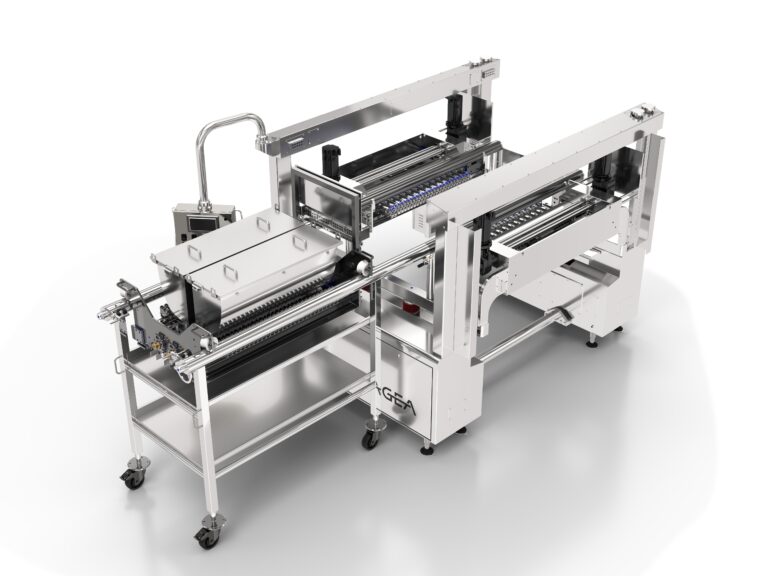
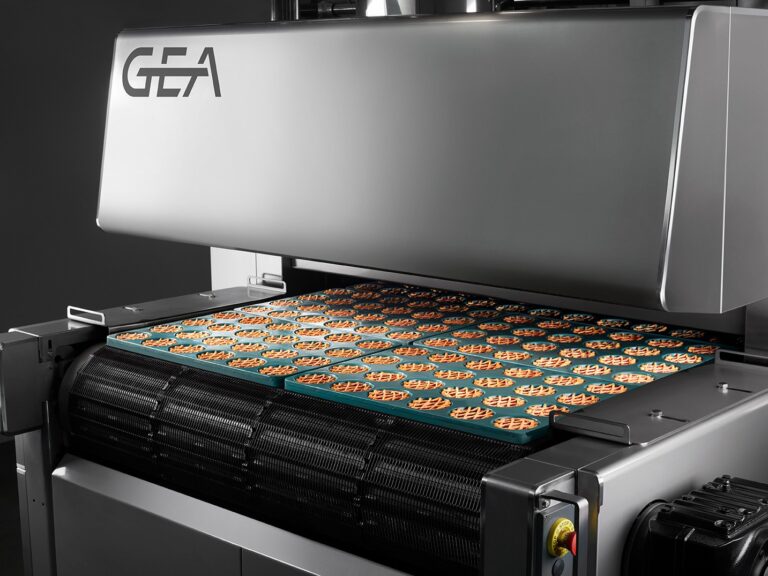
To support these challenges, AMF offers low‑stress dividing and sheeting technologies, servo-driven makeup systems, and high‑efficiency tunnel ovens with precise zoning. Automated pan and tin handling improves flow, while integrated line controls with recipe governance and SPC ensure consistency. Our post‑bake handling solutions stabilise softness and shape, preserving product quality at scale.
How AMF helps: low‑stress dividing and sheeting; servo-driven makeup; high-efficiency tunnel baking with precise zones; automated pan/tin handling; integrated line controls with recipe governance and SPC; and post-bake handling that protects softness and shape.
To support bakers facing these challenges, AMF provides technologies such as low‑stress dividing and sheeting, servo‑driven makeup systems, high‑efficiency tunnel ovens with precise temperature zoning, and automated pan and tin handling. Integrated line controls with strong recipe governance and SPC help maintain consistency, while our post‑bake handling solutions protect softness, shape, and overall product quality even at high throughput.
Automation is often discussed as a route to efficiency, but also as a way to support growth. How are bakeries using automation today to respond to labour pressures, changing demand and tighter margins?
Automation helps bakeries stabilise production and prepare for growth. By automating dough loading, makeup, panning, depanning, and packaging, plants reduce reliance on manual labour and improve workplace safety. Recipe‑driven changeovers enable quick responsiveness to demand fluctuations, supporting both short runs and high‑volume production.
Inline AI vision systems by AMF and precise measurement technologies help maintain product weights, reduce giveaway, and ensure consistent quality. Predictive maintenance tools make uptime more reliable by identifying issues before they escalate, while real-time data dashboards offer clarity around OEE, waste, and energy consumption. Modular equipment designs also allow bakeries to scale capacity incrementally – adding proofing modules, oven zones, or parallel lanes – without the need for major reinvestment.
Pizza continues to be a fast-growing category across retail and foodservice. How are production requirements evolving for pizza bases and pizza topping lines, and what does this mean for equipment design and flexibility?
Pizza production has become far more diverse, with bakeries handling multiple dough styles, fermentation profiles, hydration levels, and crust formats. This creates a strong need for gentle dough handling, recipe-led parameter control, and stable fermentation environments. Topping lines must ensure precise, repeatable application of cheese, sauces, and proteins, all at high speed to minimise giveaway.
Because pizza production often involves allergens and temperature‑sensitive toppings, hygienic design and rapid sanitation are crucial. Equipment must be easy to clean and fully accessible, with open frames and quick-release components. Baking profiles are also evolving as manufacturers seek artisan-style results – such as blistering and open crumb – delivered at industrial speeds. Overall, pizza lines today must balance flexibility, hygiene, and accuracy more than ever before.
How important is adaptable automation when bakeries want to introduce new SKUs or respond quickly to market trends?
Adaptable automation is essential for any bakery looking to stay competitive. It enables R&D teams to bring new products into full-scale production quickly, and it allows manufacturers to run short, seasonal, or retailer-specific batches without sacrificing efficiency.
Modular equipment and servo-driven systems make format changes faster and more repeatable, while unified line control ensures the entire system follows one recipe standard. In fast-moving product categories, adaptability is what gives bakeries the agility to pivot with market changes or ingredient shortages while maintaining consistent quality.
How is hygienic design influencing the development of modern bakery equipment, particularly for high-throughput bread and pizza lines?
Hygienic design standards have risen dramatically, especially in high-output environments. Food safety is increasingly important due to regulations, and thus producers must up their game to highest standards. Bakeries now expect open, sloped frames that prevent buildup, easy tool‑less access for routine cleaning, and materials that withstand frequent washdowns. Cable management above floor level, sealed bearings, and hygienic fasteners are now common requirements to reduce contamination risk. AMF covers all these aspects in its pizza and sheeting lines if required by its customers.
CIP and WIP systems are becoming increasingly important, particularly for topping and depositor equipment, enabling faster and more reliable cleaning between runs. Enhanced allergen management is also key, supported by digital checklists, validated cleaning cycles, and clear verification steps. These design improvements reduce sanitation time, lower chemical and water usage, and strengthen brand protection by reducing risk.