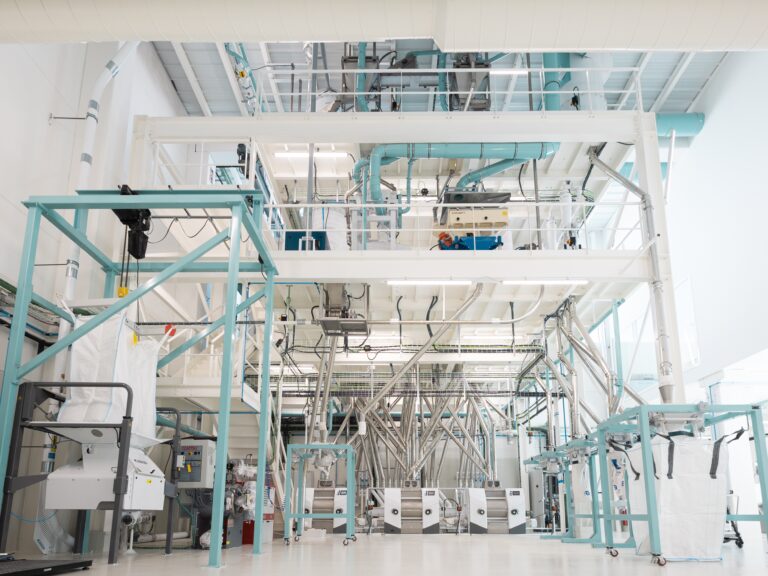
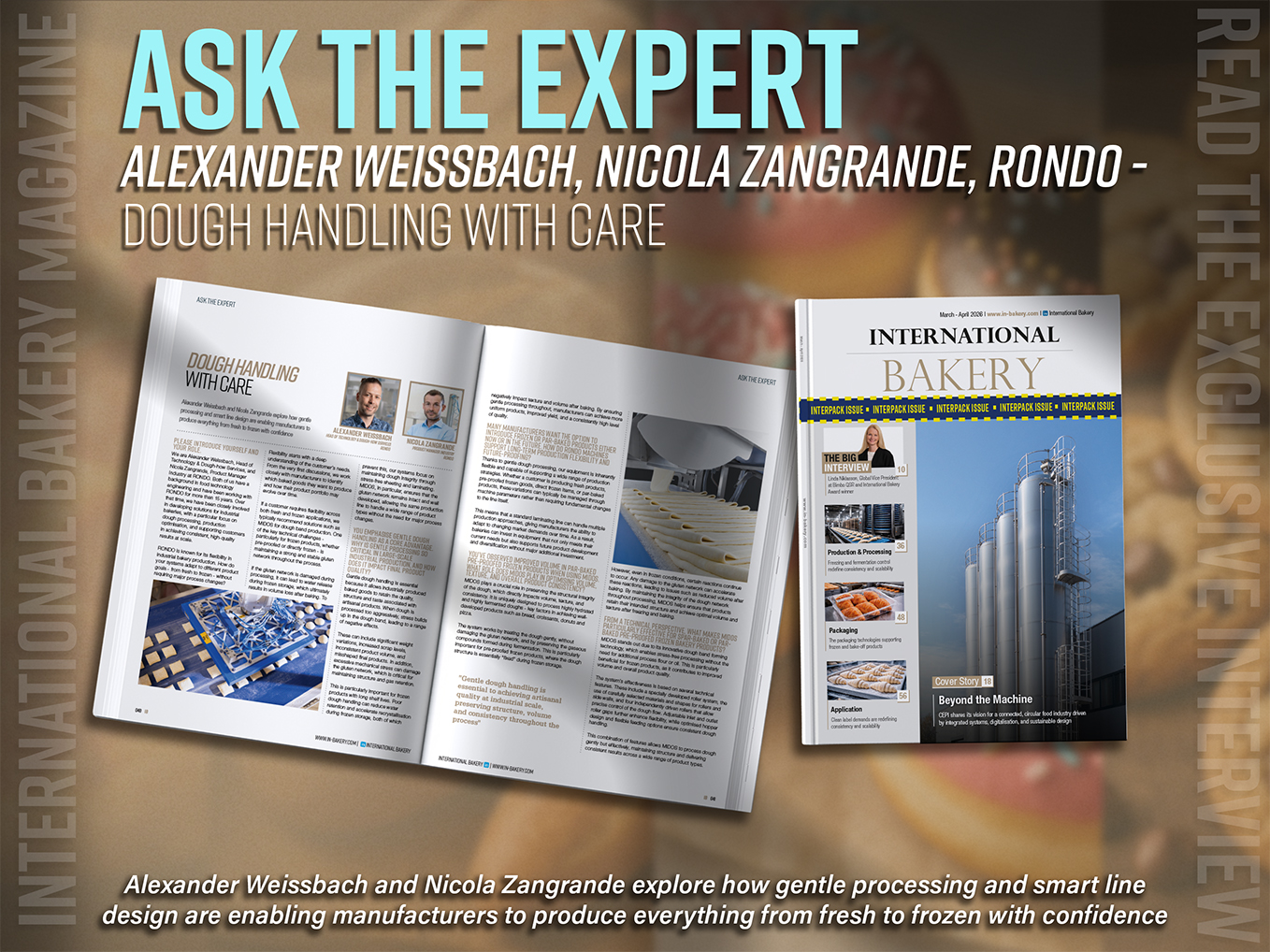

Alexander Weissbach and Nicola Zangrande explore how gentle processing and smart line design are enabling manufacturers to produce everything from fresh to frozen with confidence
Please introduce yourself and your roles…
We are Alexander Weissbach, Head of Technology & Dough-how Services, and Nicola Zangrande, Product Manager Industry at RONDO. Both of us have a background in food technology engineering and have been working with RONDO for more than 15 years. Over that time, we have been closely involved in developing solutions for industrial bakeries, with a particular focus on dough processing, production optimisation, and supporting customers in achieving consistent, high-quality results at scale.
RONDO is known for its flexibility in industrial bakery production. How do your systems adapt to different product goals – from fresh to frozen – without requiring major process changes?
Flexibility starts with a deep understanding of the customer’s needs. From the very first discussions, we work closely with manufacturers to identify which baked goods they want to produce and how their product portfolio may evolve over time.
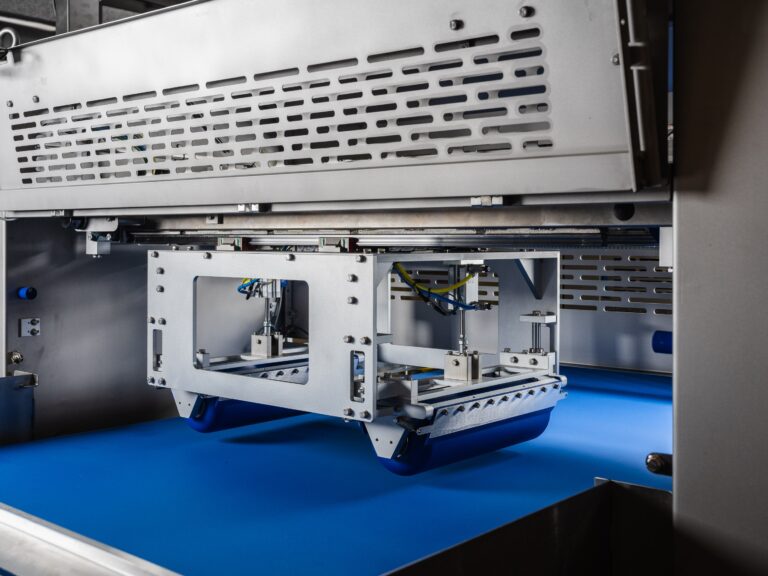
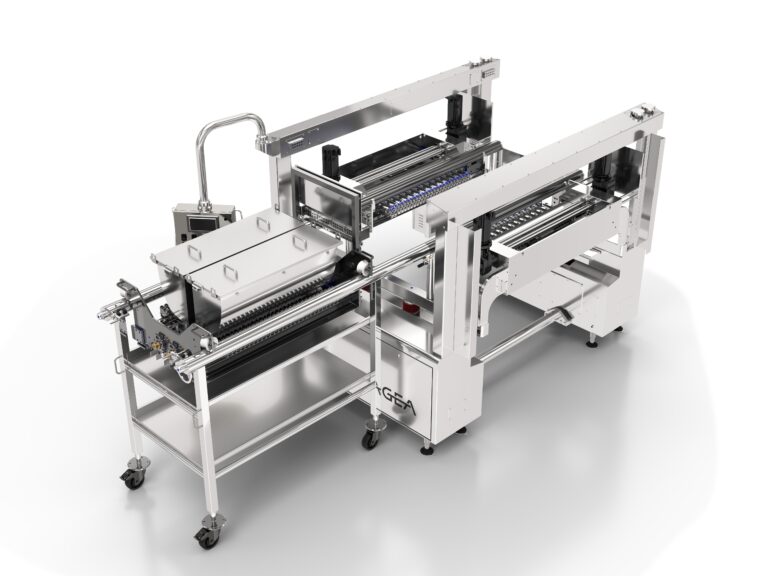
If a customer requires flexibility across both fresh and frozen applications, we typically recommend solutions such as MIDOS for dough band production. One of the key technical challenges – particularly for frozen products, whether pre-proofed or directly frozen – is maintaining a strong and stable gluten network throughout the process.
If the gluten network is damaged during processing, it can lead to water release during frozen storage, which ultimately results in volume loss after baking. To prevent this, our systems focus on maintaining dough integrity through stress-free sheeting and laminating. MIDOS, in particular, ensures that the gluten network remains intact and well developed, allowing the same production line to handle a wide range of product types without the need for major process changes.
You emphasise gentle dough handling as a core advantage. Why is gentle processing so critical in large-scale industrial production, and how does it impact final product quality?
Gentle dough handling is essential because it allows industrially produced baked goods to retain the quality, structure and taste associated with artisanal products. When dough is processed too aggressively, stress builds up in the dough band, leading to a range of negative effects.
These can include significant weight variations, increased scrap levels, inconsistent product volume, and misshaped final products. In addition, excessive mechanical stress can damage the gluten network, which is critical for maintaining structure and gas retention.
This is particularly important for frozen products with long shelf lives. Poor dough handling can reduce water retention and accelerate recrystallisation during frozen storage, both of which negatively impact texture and volume after baking. By ensuring gentle processing throughout, manufacturers can achieve more uniform products, improved yield, and a consistently high level of quality.
Many manufacturers want the option to introduce frozen or semi-cooked products either now or in the future. How do RONDO machines support long-term production flexibility and future-proofing?
Thanks to gentle dough processing, our equipment is inherently flexible and capable of supporting a wide range of production strategies. Whether a customer is producing fresh products, pre-proofed frozen goods, direct frozen items, or par-baked products, these variations can typically be managed through machine parameters rather than requiring fundamental changes to the line itself.
This means that a standard laminating line can handle multiple production approaches, giving manufacturers the ability to adapt to changing market demands over time. As a result, bakeries can invest in equipment that not only meets their current needs but also supports future product development and diversification without major additional investment.
You’ve observed improved volume in semi-cooked pre-proofed frozen products when using MIDOS. What role does MIDOS play in optimising volume, texture, and overall product consistency?
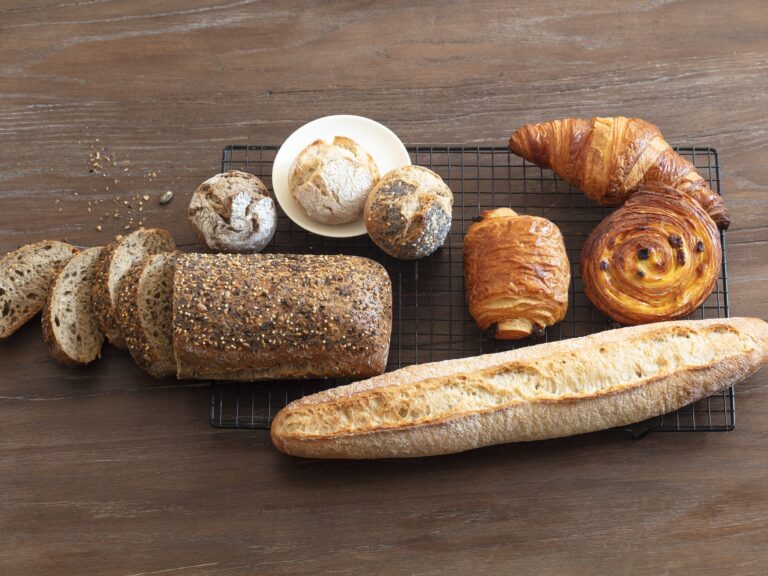
MIDOS plays a crucial role in preserving the structural integrity of the dough, which directly impacts volume, texture, and consistency. It is uniquely designed to process highly hydrated and highly fermented doughs – key factors in achieving well-developed products such as bread, croissants, donuts and pizza.
The system works by treating the dough gently, without damaging the gluten network, and by preserving the gaseous compounds formed during fermentation. This is particularly important for pre-proofed frozen products, where the dough structure is essentially “fixed” during frozen storage.
However, even in frozen conditions, certain reactions continue to occur. Any damage to the gluten network can accelerate these reactions, leading to issues such as reduced volume after baking. By maintaining the integrity of the dough network throughout processing, MIDOS helps ensure that products retain their intended structure and achieve optimal volume and texture after freezing and baking.