
Texture used to sit quietly behind flavour, but now it’s the main event. From crackly crusts and shatteringly crisp pastry to oozy fillings and chewy cookies, consumers are no longer just tasting baked goods, they’re listening, watching and feeling their way through them, explains ingredient expert Puratos.
With 7 out of 10 consumers actively seeking foods with contrasting textures, mouthfeel has become an important quality cue and a powerful driver of social media appeal. Texture is now a reason consumers choose one product over another. For bakers, patissiers, and chocolatiers, that makes texture a core consideration in product development.
Discover the texture cues consumers are responding to most for each category:
Patisserie
Layers
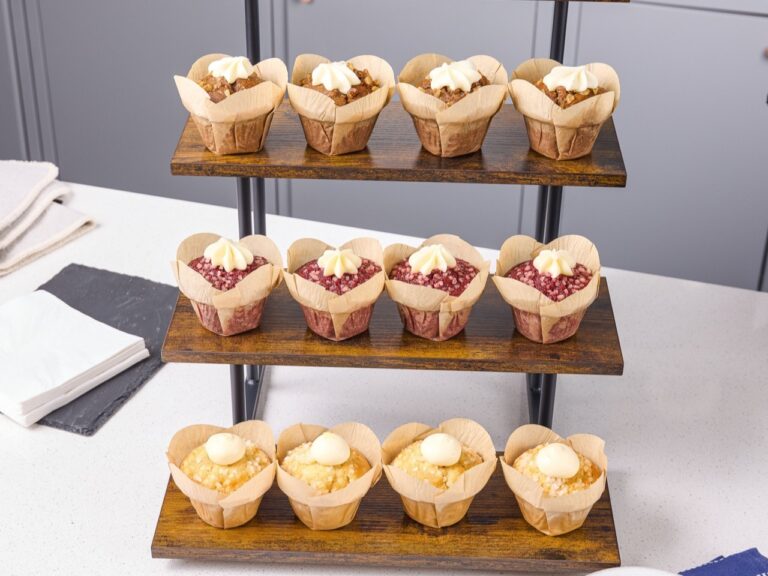
Online conversations around ‘seven layer chocolate cake’ went up 121% over the past year, as consumers are drawn to both extravagance and textural content in their pastry. Layered patisserie delivers contrast by design, alternating crumbly cake with dense buttercream or fluffy mousse. Or – in the case of the viral and trademarked Bertha cake by Get Baked – twelve layers of dark chocolate cake, sandwiched with twelve layers of milk and dark chocolate ganache. The famous Strawberry Watermelon Cake by Black Star Pastry offers a different interpretation, combining almond dacquoise, with rose flavored cream with a slice of fresh watermelon. Layers turn eating into a sequence of sensations, which is just the excitement consumers are looking for.
Cream filling
Cream filled pastries are hot. No wonder, as 86% of consumers worldwide believe cream filling adds to the tastiness of sweet pastry. Classics like cream puffs remain strong, proved by the popularity of Odette Paris specialised in choux pastries. At the same time, new interpretations are driving buzz. Patisseries like The Eclectic Collection in London and Aurora in LA that are gaining attention with fruit-shaped pastries in the style of Cédric Grolet: beneath a chocolate shell resembling mango, apple or strawberry sits a combination of mousse, fruit purée, and soft cake. These generous fillings heighten indulgence, create visual drama and deliver a consistently rich eating experience from first bite to last.
French laminated pastry
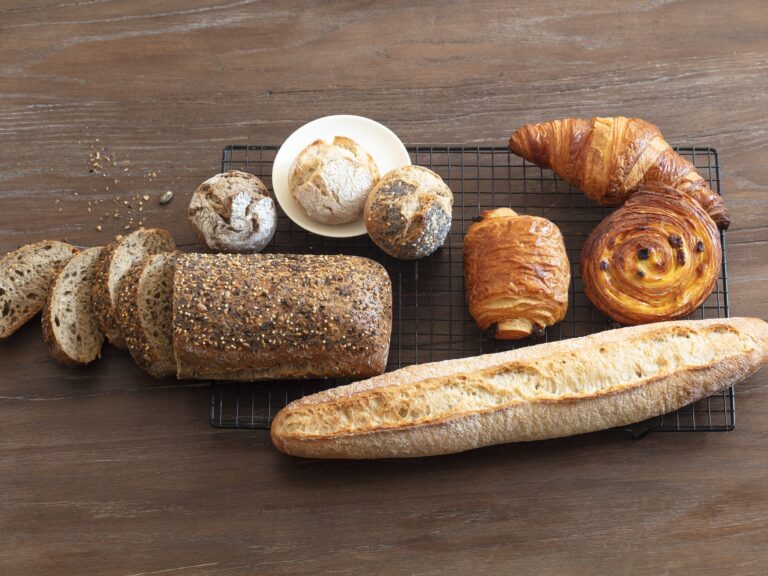
Laminated dough remains a cornerstone of patisserie, but now consumers are explicitly praising it for its texture. Online searches and social mentions of “French crispy pastry” grew by +2,400% over the past year. The term leads consumers straight to classics like mille-feuille, palmier, escargot, and Paris-Brest. The appeal lies in the crackle. A well-made laminated pastry delivers a crisp, shattering bite doesn’t just make for a satisfying bite, but also signals craftsmanship and quality.
Bakery
Crusty
Few textures are as emotionally satisfying as a crusty loaf. The audible crackle of a baguette or rustic sourdough, followed by a soft, airy interior, remains irresistible to many consumers. Their popularity is on the rise, as we’ve witnessed a +16% increase in online conversations on crusty baked goods, with another 19% projected growth for 2026. But a good crust is more than a sensory detail. It communicates freshness, skill and tradition, especially in artisanal breads. Making crusty breads gain even more relevance as consumers now place a stronger value on authenticity.
Crunchy
Crunch has become a selling point in its own right. The classic almond croissant has been reintroduced at bakery and cafe menus with an important addition: the term ‘twice baked’. Once known primarily for indulgent flavor, the product is now positioned as a textural experience, where double baking promises extra bite and crunchiness.
Industrial bakery brands are doubling down on crunchy by highlighting “double baked” on their packaging, just like Kii Naturals did on their artisan crisps. For 2026, this type of texture-forward claim is expected to become even more prominent, with online mentions of crunchy textures forecast to grow another 19%.
Chewy
In their search for new textures, bakery customers have now landed on chewiness. This mouthfeel is valued particularly in chocolate cookies, with online mentions of “chewy chocolate cookies” going up 617% over the past year, with another 392% growth for “chewy chocolate brownie cookies”. Chewiness signals comfort and it prolongs enjoyment, encouraging slower, more mindful eating.
This preference extends beyond cookies. Canelés and bakery hybrids incorporating mochi, such as mochi croissants and mochi cookies, tap into the same desire for elasticity and bounce. Chewy textures can give familiar formats a new twist, making them exciting yet easy for consumers to embrace.
Read more latest industry news and developments in our free to download magazine.
Never miss a story… Follow us on:
LinkedIn: International Bakery
X: @int_bakery
YouTube: @Bakery-TV
Media contact
Joseph Clarke
Editor, International Bakery
Tel: +44 (0) 1622 823 920
Email: [email protected]