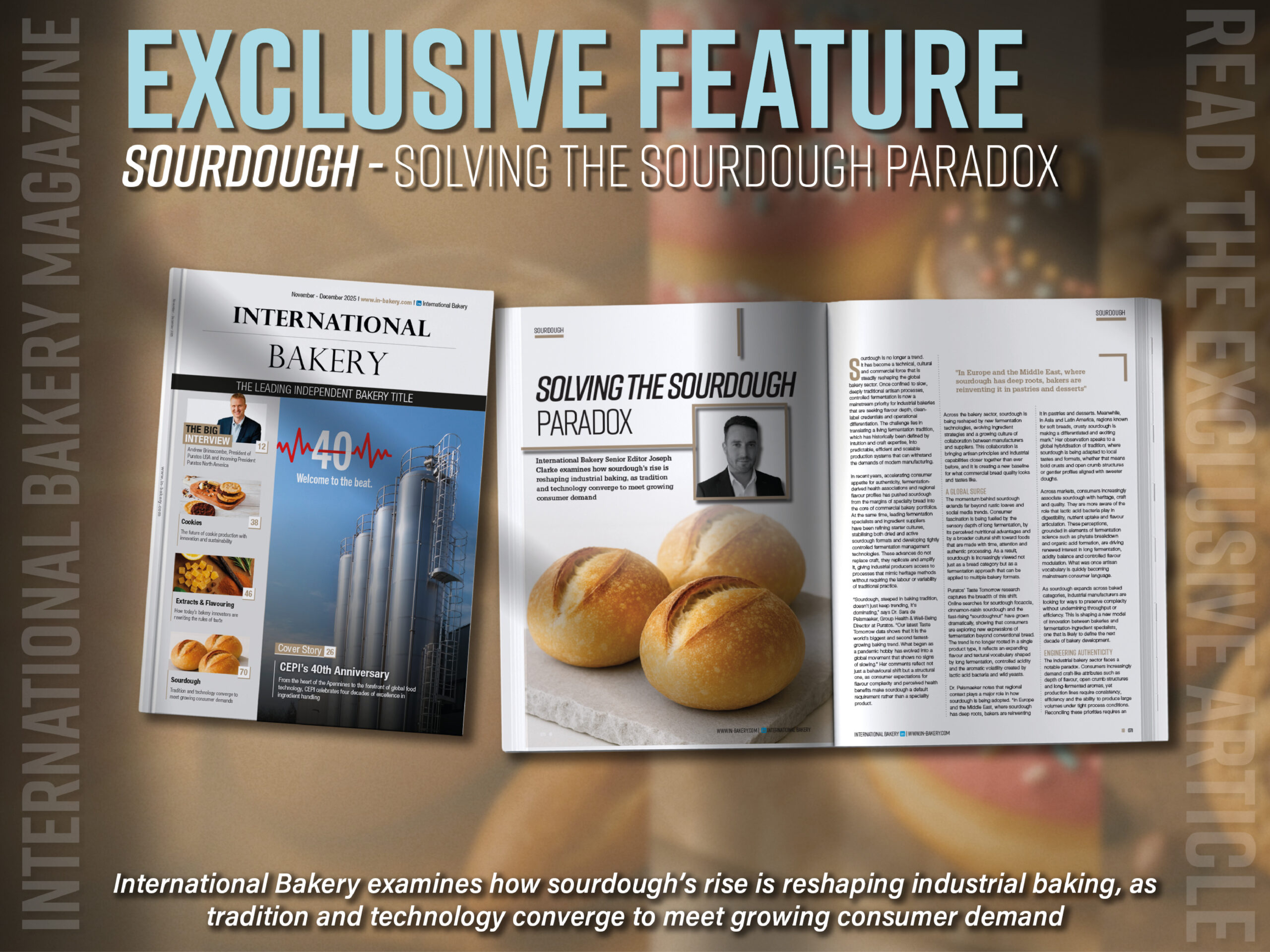

International Bakery Editor Joseph Clarke examines how sourdough’s rise is reshaping industrial baking, as tradition and technology converge to meet growing consumer demand
Sourdough is no longer a trend. It has become a technical, cultural and commercial force that is steadily reshaping the global bakery sector. Once confined to slow, deeply traditional artisan processes, controlled fermentation is now a mainstream priority for industrial bakeries that are seeking flavour depth, clean-label credentials and operational differentiation. The challenge lies in translating a living fermentation tradition, which has historically been defined by intuition and craft expertise, into predictable, efficient and scalable production systems that can withstand the demands of modern manufacturing.
In recent years, accelerating consumer appetite for authenticity, fermentation-derived health associations and regional flavour profiles has pushed sourdough from the margins of specialty bread into the core of commercial bakery portfolios. At the same time, leading fermentation specialists and ingredient suppliers have been refining starter cultures, stabilising both dried and active sourdough formats and developing tightly controlled fermentation management technologies. These advances do not replace craft, they replicate and amplify it, giving industrial producers access to processes that mimic heritage methods without requiring the labour or variability of traditional practice.
“Sourdough, steeped in baking tradition, doesn’t just keep trending, it’s dominating,” says Dr. Sara de Pelsmaeker, Group Health & Well-Being Director at Puratos. “Our latest Taste Tomorrow data shows that it is the world’s biggest and second fastest-growing baking trend. What began as a pandemic hobby has evolved into a global movement that shows no signs of slowing.” Her comments reflect not just a behavioural shift but a structural one, as consumer expectations for flavour complexity and perceived health benefits make sourdough a default requirement rather than a speciality product.
Across the bakery sector, sourdough is being reshaped by new fermentation technologies, evolving ingredient strategies and a growing culture of collaboration between manufacturers and suppliers. This collaboration is bringing artisan principles and industrial capabilities closer together than ever before, and it is creating a new baseline for what commercial bread quality looks and tastes like.
A Global Surge
The momentum behind sourdough extends far beyond rustic loaves and social media trends. Consumer fascination is being fuelled by the sensory depth of long fermentation, by its perceived nutritional advantages and by a broader cultural shift toward foods that are made with time, attention and authentic processing. As a result, sourdough is increasingly viewed not just as a bread category but as a fermentation approach that can be applied to multiple bakery formats.
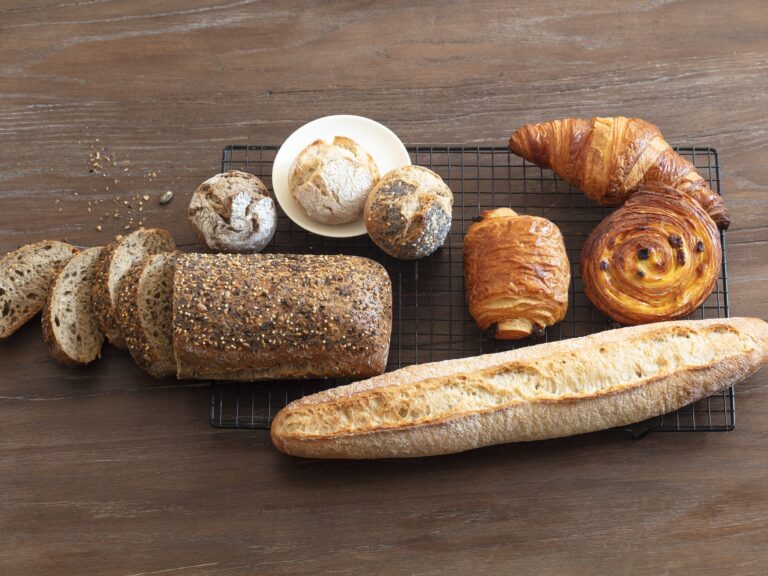
Puratos’ Taste Tomorrow research captures the breadth of this shift. Online searches for sourdough focaccia, cinnamon-raisin sourdough and the fast-rising “sourdoughnut” have grown dramatically, showing that consumers are exploring new expressions of fermentation beyond conventional bread. The trend is no longer rooted in a single product type, it reflects an expanding flavour and textural vocabulary shaped by long fermentation, controlled acidity and the aromatic volatility created by lactic acid bacteria and wild yeasts.
Dr. Pelsmaeker notes that regional context plays a major role in how sourdough is being adopted. “In Europe and the Middle East, where sourdough has deep roots, bakers are reinventing it in pastries and desserts. Meanwhile, in Asia and Latin America, regions known for soft breads, crusty sourdough is making a differentiated and exciting mark.” Her observation speaks to a global hybridisation of tradition, where sourdough is being adapted to local tastes and formats, whether that means bold crusts and open crumb structures or gentler profiles aligned with sweeter doughs.
Across markets, consumers increasingly associate sourdough with heritage, craft and quality. They are more aware of the role that lactic acid bacteria play in digestibility, nutrient uptake and flavour articulation. These perceptions, grounded in elements of fermentation science such as phytate breakdown and organic acid formation, are driving renewed interest in long fermentation, acidity balance and controlled flavour modulation. What was once artisan vocabulary is quickly becoming mainstream consumer language.
As sourdough expands across baked categories, industrial manufacturers are looking for ways to preserve complexity without undermining throughput or efficiency. This is shaping a new model of innovation between bakeries and fermentation-ingredient specialists, one that is likely to define the next decade of bakery development.
Read the full article in our latest issue here