
Corbion has announced that its European patent covering coated food-grade particle technology has been successfully upheld in amended form by the European Patent Office following appeal proceedings.
European patent EP2037758, titled Partially Neutralized Acid Coated Food-Grade Particles, relates to technology for coating food-grade acids and their salts with partially neutralised polycarboxylic acids. The technology can be used across a variety of food applications, including bakery products, confectionery, beverages, soups, sauces, dressings and seasoning blends.
Corbion said the successful outcome reinforces its commitment to protecting intellectual property and continuing to invest in ingredient technologies that can help food manufacturers overcome formulation challenges and develop differentiated products.
The company specialises in sustainable food ingredient solutions, with a portfolio spanning lactic acid and derivatives, preservation systems, functional ingredient blends and nutritional ingredients.
Improving stability and ingredient performance
The patented technology is designed to provide greater control over the behaviour of food-grade acids within formulations.
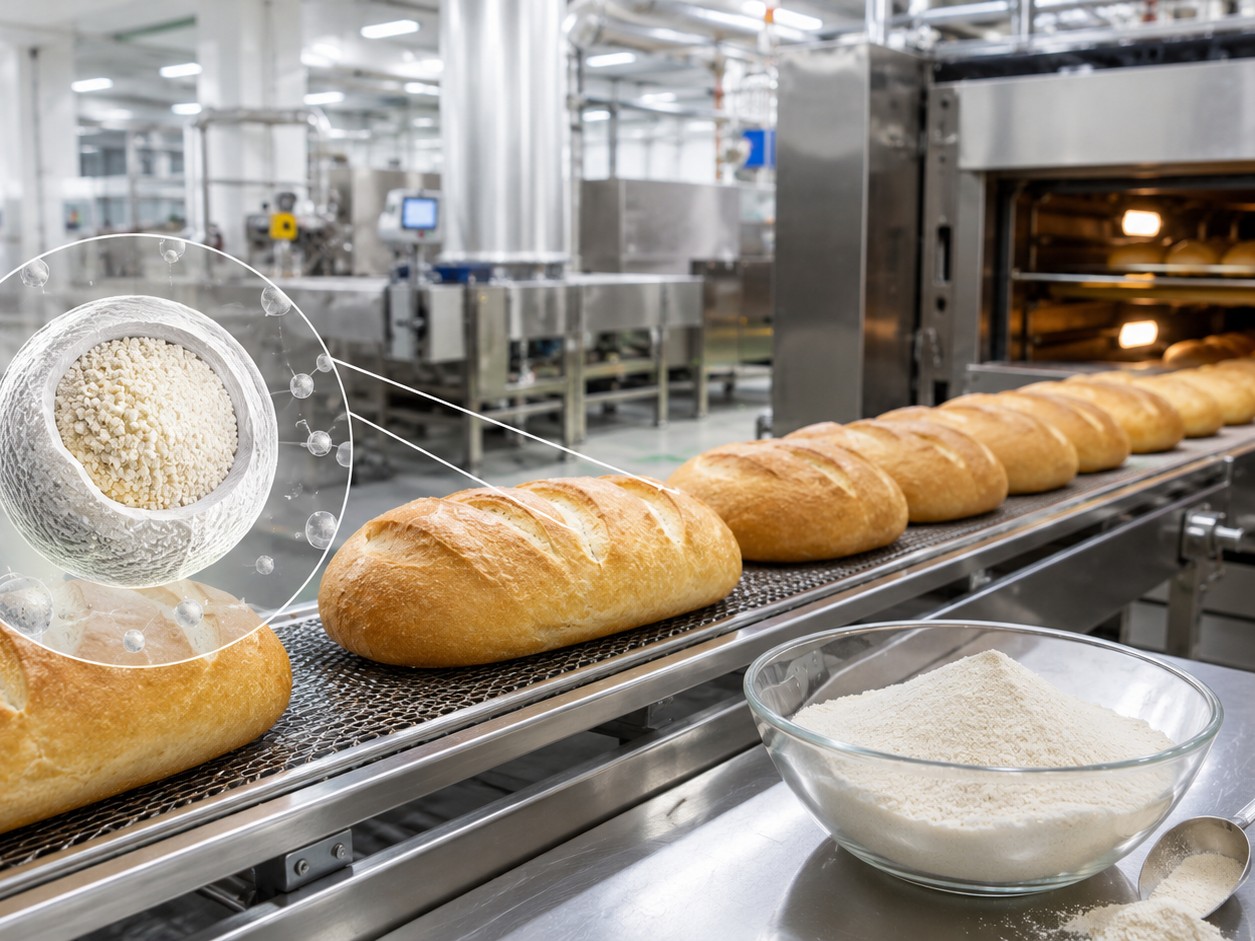
Food acids may be coated or encapsulated to control when they are released during processing or consumption. Release can be triggered by factors such as contact with water, heat or changes in pH, allowing manufacturers greater control over ingredient functionality.
Coating can also protect acids from environmental conditions during storage. Hygroscopic acids, for example, can absorb moisture, potentially resulting in ingredients becoming sticky and contributing to changes in product taste, texture or appearance.
Corbion’s patented approach uses partially neutralised polycarboxylic acids as a coating material around a food-grade core. According to the patent, the resulting particles can provide increased stability, helping products maintain appearance, taste and texture while supporting longer shelf life.
The patent identifies a range of food-grade organic acids that can potentially be incorporated into the technology, including malic, lactic, citric, fumaric, adipic and tartaric acids.
For industrial bakery manufacturers, controlled ingredient functionality and stability can be particularly relevant as producers seek to maintain consistent product characteristics across high-volume manufacturing, storage and distribution.
Corbion reinforces innovation strategy
Following the European Patent Office decision, Corbion said protecting its intellectual property remains an important part of its wider strategy to create value for food manufacturers.
“Innovation is at the core of how Corbion creates value for customers,” said David Charest, Senior Vice President, Preservation & Specialty Ingredients at Corbion.
“This outcome reinforces the importance of protecting the innovations that help our customers differentiate their products and succeed in the marketplace. We will continue to invest in the technologies, expertise, and intellectual property that drive long-term value for our customers and the industry.”
Corbion said changing customer and market requirements continue to drive its development of new technologies across the food sector. The company combines scientific expertise with application knowledge and ingredient development to help manufacturers address formulation requirements and bring new products to market.
The business has more than a century of experience in food ingredient development and fermentation technology. In 2025, Corbion generated annual sales of €1.27 billion and employed approximately 2,408 full-time equivalent employees globally.
The latest patent decision adds to Corbion’s intellectual property portfolio as the company continues to invest in preservation, nutrition and functional ingredient technologies for food manufacturers.
One point worth noting: this is relevant to industrial bakery, but it is less bakery-focused than the Innophos story. The patent explicitly includes bakery products, although much of the technology’s historic commercial emphasis has been on confectionery applications.